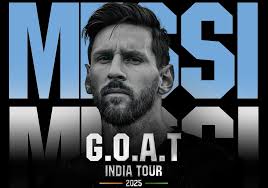
Messi in India
Introduction: When India Stopped to Watch Lionel Messi
When Lionel Messi arrived in India, the reaction was immediate and overwhelming. Crowds flooded streets, fans waved Argentine flags, media outlets ran wall-to-wall coverage, and social media timelines were dominated by a single name: Messi.
To many, it looked like another celebrity tour — a global football icon visiting one of the world’s most passionate fan bases. But beneath the noise, beyond the chants and camera flashes, something far more calculated was unfolding.
This was not just a visit.
It was positioning.
Messi’s presence in India represents a rare intersection of sport, culture, politics, and long-term global strategy — one that most casual observers have yet to fully grasp.
The Immediate Chaos: A Nation Reacts
India’s response to Messi’s arrival was visceral. Airports, hotels, stadiums, and public venues experienced scenes more commonly associated with World Cup finals than exhibition appearances.
Several factors fueled the frenzy:
- India is home to one of the largest Messi fan bases outside Latin America
- Digital penetration has amplified football fandom beyond traditional markets
- Messi’s legacy as a World Cup winner elevated his presence from athlete to icon
This chaos, however, was not accidental. It was predictable — and likely anticipated.
Messi in India 2025 strategic planning, predictability is leverage.
Where Lionel Messi Visited in India
Messi’s itinerary was carefully structured, focusing on symbolic cities rather than random destinations. Each location played a distinct role in shaping the narrative of his visit.
Kolkata: Football Heritage and Emotional Capital
Kolkata is widely regarded as the heart of Indian football culture. Home to historic clubs and deeply rooted fan traditions, the city represents football’s emotional foundation Messi in India.
Messi’s presence in Kolkata connected him directly with:
- Legacy football supporters
- Grassroots enthusiasm
- Symbolic football history
This was not a commercial stop — it was a credibility stop.
Mumbai: Culture, Media, and Global Visibility
Mumbai is India’s cultural and entertainment capital. Here, Messi engaged with:
- Bollywood figures
- Media executives
- High-profile influencers
This phase of the visit placed Messi at the crossroads of sport and pop culture, ensuring:
- Maximum media amplification
- Cross-industry relevance
- Youth and lifestyle appeal
Messi in India, Mumbai was about visibility and narrative dominance.
Delhi: Power, Policy, and Sports Diplomacy
Perhaps the most strategically significant stop was New Delhi, where Messi in India was scheduled to meet Prime Minister Narendra Modi.
This elevated the visit from celebrity tour to state-level engagement.
When an athlete meets a head of government, the message is clear:
This is not entertainment. This is influence.
The Narendra Modi Meeting: Why It Changes Everything
The arranged meeting between Lionel Messi in India and Prime Minister Narendra Modi represents the most overlooked — yet most important — element of the entire visit.
Sports Diplomacy in Action
Sports diplomacy uses global athletes as bridges between nations, cultures, and institutions. Messi’s meeting with Modi signals:
- Official recognition of football’s growing role in India
- Alignment with India’s ambition to diversify beyond cricket
- A message to global sports bodies that India is serious about football development
This is the same model previously used by countries to:
- Attract international events
- Promote youth sports
- Build global soft power
Messi in India as a Neutral Global Symbol
Messi is uniquely positioned for this role because:
- He is non-controversial politically
- He commands universal respect
- His brand is associated with excellence, humility, and legacy
This makes him an ideal ambassador for emerging football markets.
Who Lionel Messi Met in India
Beyond political leadership, Messi’s meetings were carefully curated to span sports, culture, and influence.
Sports Icons
- Sachin Tendulkar, India’s most revered sporting figure
- Sunil Chhetri, the face of Indian football
These meetings symbolized a passing of cultural relevance from cricket to football — not as a replacement, but as an expansion.
Cultural Leaders
- Bollywood actors and industry figures
- Media personalities shaping national narratives
This ensured football entered conversations beyond sports pages.
The Bigger Picture: Why India Matters to Messi
To understand Messi’s visit, one must understand where global football is heading.
Europe Is Mature. India Is Foundational.
European football markets are saturated. Fan loyalty is established, sponsorship ceilings are visible, and growth is incremental.
India, by contrast, offers:
- 1.4 billion people
- One of the youngest populations globally
- Explosive digital consumption growth
- Rising interest in football among Gen Z audiences
For global athletes, India is not about immediate returns.
It’s about future dominance.
Digital First: Messi’s True Playing Field
India is one of the largest digital ecosystems in the world. Messi’s influence here extends far beyond stadiums:
- Social media engagement
- Streaming viewership
- Content monetization
- Brand partnerships
Each appearance fuels long-term digital relevance, particularly among young fans encountering Messi not through live matches, but through screens.
Football Development: Beyond Appearances
While Messi is unlikely to play professionally in India, his visit opens doors for:
- Youth academies
- Training programs
- International exhibitions
- FIFA-aligned development initiatives
In modern sports economics, symbolic presence precedes structural investment.
Messi’s visit creates legitimacy — and legitimacy attracts capital.
The Soft Power Equation
Countries increasingly compete not just economically or militarily, but culturally.
Sport is one of the most powerful soft-power tools available.
Messi’s presence allows India to:
- Signal openness to global football culture
- Reposition itself in international sports conversations
- Inspire domestic interest without coercion
This is influence without force.
Chaos vs Control: Understanding the Dual Narrative
To the public, Messi’s visit looked chaotic.
To strategists, it was controlled.
The chaos served one purpose: attention.
The meetings served another: alignment.
Successful global influence campaigns often operate on this dual layer — spectacle for the masses, strategy for decision-makers.
Messi’s Long-Term Vision: Legacy Over Trophies
At this stage of his career, Messi is no longer chasing titles.
He is shaping legacy.
Legacy today is defined by:
- Global reach
- Cultural resonance
- Market creation
- Influence beyond sport
India represents one of the final frontiers for football globalization — and Messi arrived early.
What This Means for Indian Football
Messi’s visit will not transform Indian football overnight.
But it may accelerate:
- Youth participation
- Government support
- Private investment
- International partnerships
Every major football nation began with a moment of belief.
Moments like this matter.
Conclusion: More Than a Visit
Lionel Messi’s visit to India was never about match results or trophies.
It was about visibility, influence, and future alignment.
The crowds were real.
The chaos was genuine.
But the strategy was deliberate.
When football icons meet political leaders, cultural figures, and youth audiences in emerging markets, they are not touring — they are shaping narratives.
And narratives, in the modern world, build legacies.
Final Takeaway
What looked like chaos on the surface was control underneath.
What felt like noise was strategy.
And what appeared temporary may define football’s future in India.