Barcelona Beat Real Madrid in Super Cup 2026
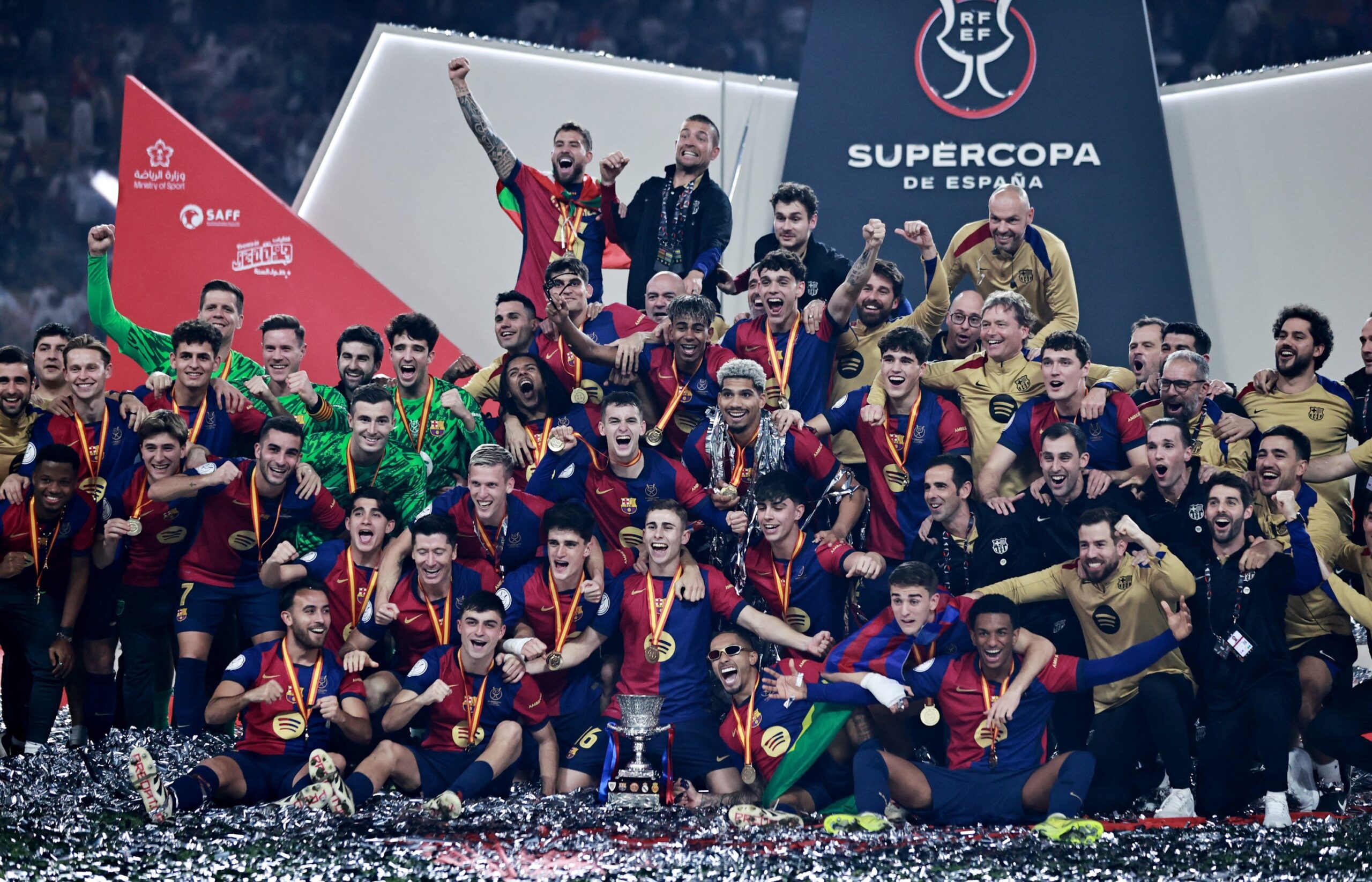
Barcelona once again proved their supremacy over eternal rivals Real Madrid, defeating them 3–2 in a thrilling El Clásico final to retain the Spanish Super Cup in Saudi Arabia. In a match defined by tactical intelligence, individual brilliance, and elite-level pressure management, Raphinha emerged as the decisive figure, scoring twice to hand the Catalans their record-extending 16th Super Cup title.
From a football analyst’s standpoint, this was not merely a cup final—it was a strategic contest between two evolving projects, with Hansi Flick’s Barcelona continuing to outmaneuver Xabi Alonso’s Madrid on the biggest stage.
Match Context: El Clásico on Neutral Ground, Global Stakes
The Spanish Super Cup final, staged in Jeddah, Saudi Arabia, brought together football’s most iconic rivalry. El Clásico has always transcended domestic competition, and this edition carried added narrative weight:
- Barcelona defending champions
- Real Madrid under a new tactical era with Xabi Alonso
- Kylian Mbappé returning from injury
- A growing global audience in the Middle East
The clash reinforced why Barcelona vs Real Madrid remains the most commercially powerful fixture in world football.
First-Half Breakdown: Chaos, Quality, and Ruthless Efficiency
Barcelona’s Controlled Possession vs Madrid’s Transitional Threat
Barcelona began the match with structured possession, circulating the ball patiently under the Saudi evening heat. Flick’s side sought to stretch Madrid horizontally, drawing defenders out to create half-spaces for Pedri and Yamal.
Madrid, by contrast, adopted a mid-to-low block, targeting fast transitions through Vinícius Júnior—a calculated gamble that nearly paid dividends.
Raphinha Opens the Scoring (36’)
After missing a clear chance moments earlier, Raphinha responded with elite winger instinct. Cutting inside from the right, he struck early and low across Courtois into the far corner.
Analyst Insight:
This goal exposed Madrid’s delayed full-back rotation. Raphinha attacked the space before defensive balance was restored—classic elite timing.
Vinícius Júnior’s Individual Magic
Madrid’s equalizer came through Vinicius Junior, who delivered a moment of pure genius—gliding past Jules Koundé, nutmegging him, and finishing with composure.
Despite failing to score in his previous 16 matches, Vinícius reminded everyone why he remains Madrid’s most dangerous outlet.
Lewandowski and Gonzalo García Trade Blows
Barcelona reclaimed the lead via Robert Lewandowski, who delicately chipped Courtois after an incisive Pedri through-ball.
But Madrid struck back in dramatic fashion. Young forward Gonzalo Garcia reacted quickest after Dean Huijsen’s header rebounded off the crossbar, leveling the match just before halftime.
Halftime Score: 2–2
A first half rich in narrative, goals, and elite attacking execution.
Second Half: Tactical Chess and a Defining Deflection
Slower Tempo, Higher Stakes
The second half saw both sides lower the tempo, prioritizing positional discipline over chaos. Flick adjusted Barcelona’s pressing triggers, while Alonso attempted to stabilize Madrid’s midfield spacing.
Goalkeepers Joan García and Courtois exchanged important saves, denying Rodrygo and Yamal respectively.
The Winning Moment: Raphinha Again (73’)
The decisive goal arrived when Raphinha struck from distance. His effort deflected off Raúl Asencio, wrong-footing Courtois and settling into the net.
Why This Goal Mattered:
- Raphinha’s seventh goal in five matches
- Reward for Barcelona’s territorial dominance
- Psychological blow to Madrid just as Mbappé was preparing to enter
Late Drama: Red Card, Mbappé, and Missed Chances
Mbappé’s Introduction
Xabi Alonso introduced Kylian Mbappe for the final 15 minutes, hoping for a moment of superstar magic. However, Barcelona managed his threat expertly, limiting his space and forcing him wide.
Frenkie de Jong Sent Off
Barcelona midfielder Frenkie de Jong was shown a red card for a high challenge on Mbappé, giving Madrid numerical superiority in the closing stages.
Yet even with ten men, Barcelona defended intelligently—keeping compact lines and controlling second balls.
Missed Chances at Both Ends
- Marcus Rashford (introduced late) fired wide when clean through
- Raúl Asencio headed straight at Joan García in stoppage time
Madrid pushed, but Barcelona held firm.
Tactical Analysis: Why Barcelona Won
1. Superior Wide Play
Raphinha and Yamal consistently pinned Madrid’s full-backs, preventing overloads on Vinícius.
2. Midfield Control
Pedri dictated tempo intelligently, while Gavi and De Jong disrupted Madrid’s buildup phases.
3. Flick’s El Clásico Blueprint
Under Hansi Flick, Barcelona have now won four consecutive Clásicos—a remarkable statistic reflecting tactical preparation rather than coincidence.
4. Madrid’s Structural Growing Pains
Xabi Alonso is still implementing his philosophy. Madrid showed flashes of brilliance but lacked defensive cohesion in decisive moments.
Raphinha: From Question Mark to Match Winner
Once viewed as inconsistent, Raphinha has evolved into Barcelona’s most decisive wide attacker:
- Relentless pressing
- Improved decision-making
- Big-game mentality
This final confirmed his transformation from rotation winger into elite-level difference-maker.
What This Means for the Season Ahead
Historically, the last four Spanish Super Cup winners have gone on to win La Liga.