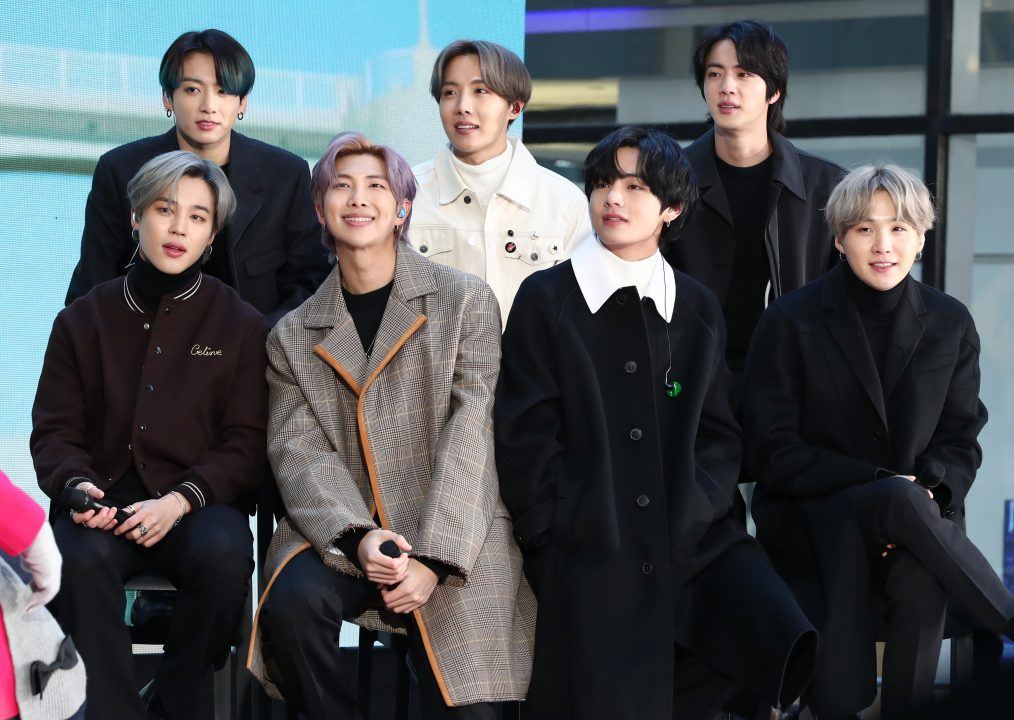
When BTS confirmed their return as a complete group in early 2026, the response was immediate and global. Yet the significance of the announcement extended far beyond the familiar surge of fan anticipation that accompanies a major pop release. This was not simply a comeback. It was recognition of something increasingly rare in the contemporary music economy: a carefully managed re-entry that signals endurance, institutional maturity, and sustained cultural scale.
Following the completion of mandatory military service by all seven members, BTS will release a new studio album on 20 March 2026, followed by the BTS World Tour 2026-2027—a stadium-level global tour spanning more than 70 shows across Asia, the Americas, Europe, and Australia, running through March 2027.
In an industry often defined by speed, saturation, and abbreviated attention cycles, BTS’s return presents a counter-narrative. Longevity, in this case, is not incidental. It is strategy.
A Return Built on Absence, Not Overexposure
Hiatus in popular music is typically framed as risk. Momentum dissipates, audiences fragment, and relevance fades. BTS’s pause, however, followed a different logic. It was neither creative exhaustion nor commercial retreat. It was a national obligation—publicly acknowledged, transparently communicated, and institutionally unavoidable.
During this period, the group did not vanish. Their catalogue continued to dominate global streaming charts. Their individual projects reinforced artistic breadth rather than diluting brand coherence. Perhaps most notably, their fanbase—often described in cultural terms but rarely analysed structurally—remained intact.
This distinction matters. BTS did not rely on constant output to sustain visibility. Instead, absence itself became a stabilising force, allowing anticipation to accumulate without eroding trust. By the time the group reconvenes in 2026, they do so not as a nostalgia act attempting revival, but as an institution that never truly exited the global conversation.
In economic terms, BTS avoided the common post-hiatus penalty: the perception of diminished relevance. In cultural terms, they transformed pause into proof of permanence one of them in BTS World Tour 2026-2027.
The Album as a Strategic Reset
Details surrounding BTS’s forthcoming album remain closely guarded as of mid-January 2026. What is clear, however, is the role the release is expected to play. This is not positioned as a high-frequency chart exercise designed to chase short-term metrics. It is a reset point.
Industry observers expect the album to foreground reflection rather than reinvention—music shaped by transition, distance, and return. For a group whose work has historically balanced emotional immediacy with commercial precision, this suggests a recalibration rather than a pivot. The goal is continuity with depth.
Such positioning is deliberate. In a market saturated by algorithm-driven releases and accelerated promotional cycles, restraint itself has become a differentiator. BTS appears to be betting that narrative coherence will outperform novelty.
The album, in this sense, functions as infrastructure. It anchors the tour, contextualises the return, and provides the emotional logic that transforms scale into meaning.
The Architecture of a Global Tour
The BTS World Tour 2026–2027 is notable not only for its breadth, but for its construction. Spread across multiple legs and continents, the tour prioritises repeat engagements in major markets—North America, Europe, Southeast Asia, and Latin America—while maintaining symbolic and commercial presence in South Korea and Japan.
This is not saturation. It is strategic density.
Multi-night stadium runs in cities such as Los Angeles, London, São Paulo, Tokyo, and New York place BTS within a narrow cohort of artists capable of sustaining demand at that scale. The decision to return to Southeast Asian capitals—Jakarta, Bangkok, Singapore, Manila—signals something equally important: recognition of markets that are digitally mature, demographically young, and historically underserved by Western touring cycles.
In doing so, BTS challenges an implicit hierarchy in global live entertainment, where touring priority has traditionally followed Western consumption patterns rather than global engagement data.
Ticket Demand as a Market Signal
Early presale data through official fan-membership platforms has indicated exceptional pressure on supply. Analysts tracking live-entertainment traffic have noted demand curves comparable to the largest post-pandemic global tours, with sell-through times measured in minutes in several territories.
This phenomenon is often described as fandom intensity. But that framing understates the structural reality. BTS operates at the intersection of music, identity, and networked community. Ticket demand is not simply transactional; it is participatory.
Their concerts function as cultural gatherings rather than discrete performances. Attendance is not merely consumption, but affirmation—of belonging, continuity, and shared narrative. From a market perspective, this produces a demand profile closer to major sporting events or cultural festivals than to conventional pop tours.
Production, Technology, and the Experience Economy
The tour is expected to deploy a 360-degree stage design, immersive visual systems, and narrative-driven sequencing that prioritises proximity and emotional continuity over spectacle alone. This aligns with a broader shift in live entertainment, where audience experience is increasingly defined by spatial design and affective flow rather than scale for its own sake.
For BTS, whose relationship with their audience has long been central to their appeal, this approach represents alignment rather than experimentation. The technology serves the relationship, not the reverse.
In economic terms, this reflects the maturation of the experience economy. Audiences are no longer satisfied by attendance alone; they seek coherence, intimacy, and memory-making. BTS’s production philosophy suggests an acute awareness of that shift.
Economic Impact Beyond the Arena
Large-scale BTS concerts have consistently generated measurable economic effects in host cities. Tourism inflows, hotel occupancy, local transportation usage, and retail activity often spike around tour dates. In several regions, city authorities now treat BTS concerts as quasi-infrastructure events, with implications for urban planning and public services.
This is not unusual for global tours. What distinguishes BTS is the scale of ancillary engagement: fan-led tourism, cultural events, and digital amplification that extends economic impact beyond the concert window itself.
For governments and tourism boards, BTS tour stops increasingly function as instruments of soft power. They project cultural relevance, technological modernity, and global connectedness—attributes that extend well beyond the music industry.
Cultural Authority in a Decentralised World
Perhaps the most enduring significance of BTS’s return lies in what it reveals about contemporary cultural authority. For much of the past century, global pop leadership flowed outward from a small number of centres—primarily the United States and Western Europe. Language, geography, and distribution infrastructure reinforced that hierarchy.
BTS disrupted it.
Their success demonstrates that global influence is no longer exported from a single centre, but negotiated across many. Digital platforms, networked fandoms, and transnational identities have flattened cultural geography. BTS’s Korean identity is not a barrier to global reach; it is part of the value proposition.
In this context, the group’s return is not merely a musical event. It is a reaffirmation of a multipolar cultural order.
Why Timing Matters
The BTS World Tour 2026–2027 arrives at a moment of recalibration for the music industry. Streaming growth has slowed in several mature markets. Touring costs have risen sharply. Audience loyalty is increasingly fragmented across platforms, genres, and identities.
Against this backdrop, BTS offers a contrasting model. Patient brand building. Controlled scarcity. Emotional continuity. Rather than flooding the market, the group re-enters it deliberately.
The tour is not framed as a victory lap, nor as reinvention. It is framed as continuation—arguably the most difficult posture to sustain in modern pop culture, where relevance is often measured by novelty rather than consistency.
The Discipline of Not Over-Explaining
Notably, BTS has avoided over-narrativising their return. There is no grand rhetoric of rebirth, no attempt to dramatise absence as loss. The message is measured: the group fulfilled its obligations and has resumed its work.
This restraint aligns closely with the editorial sensibilities of institutions rather than entertainers. It suggests confidence in structural relevance rather than reliance on emotional spectacle.
In doing so, BTS avoids a common pitfall of major comebacks: the temptation to frame return as redemption.
A Case Study in Institutional Pop
From an industry perspective, BTS now occupies a category closer to institution than act. Their decisions shape markets, not merely charts. Their tours recalibrate routing strategies. Their releases influence platform behaviour.
This institutional status is not accidental. It is the result of long-term coherence between creative output, audience relationship, and organisational discipline. The 2026–2027 tour should be understood within that continuum.
For emerging artists and labels, the lesson is instructive but difficult to replicate. Longevity requires more than hits. It requires trust, narrative consistency, and the willingness to step back when circumstances demand it.
A Measured Comeback, Not a Spectacle
For fans, the tour represents reunion and affirmation. For the industry, it is a case study in long-term relevance. For global culture, it is a reminder that pop music, at its most effective, can operate simultaneously as entertainment, identity, and infrastructure.
BTS is not returning to reclaim attention.
They are returning because they never lost it.